Aesthetics
Microneedling with PRP
Collagen induction using your own platelet-rich plasma, for texture, scarring and tone.
Book a consultation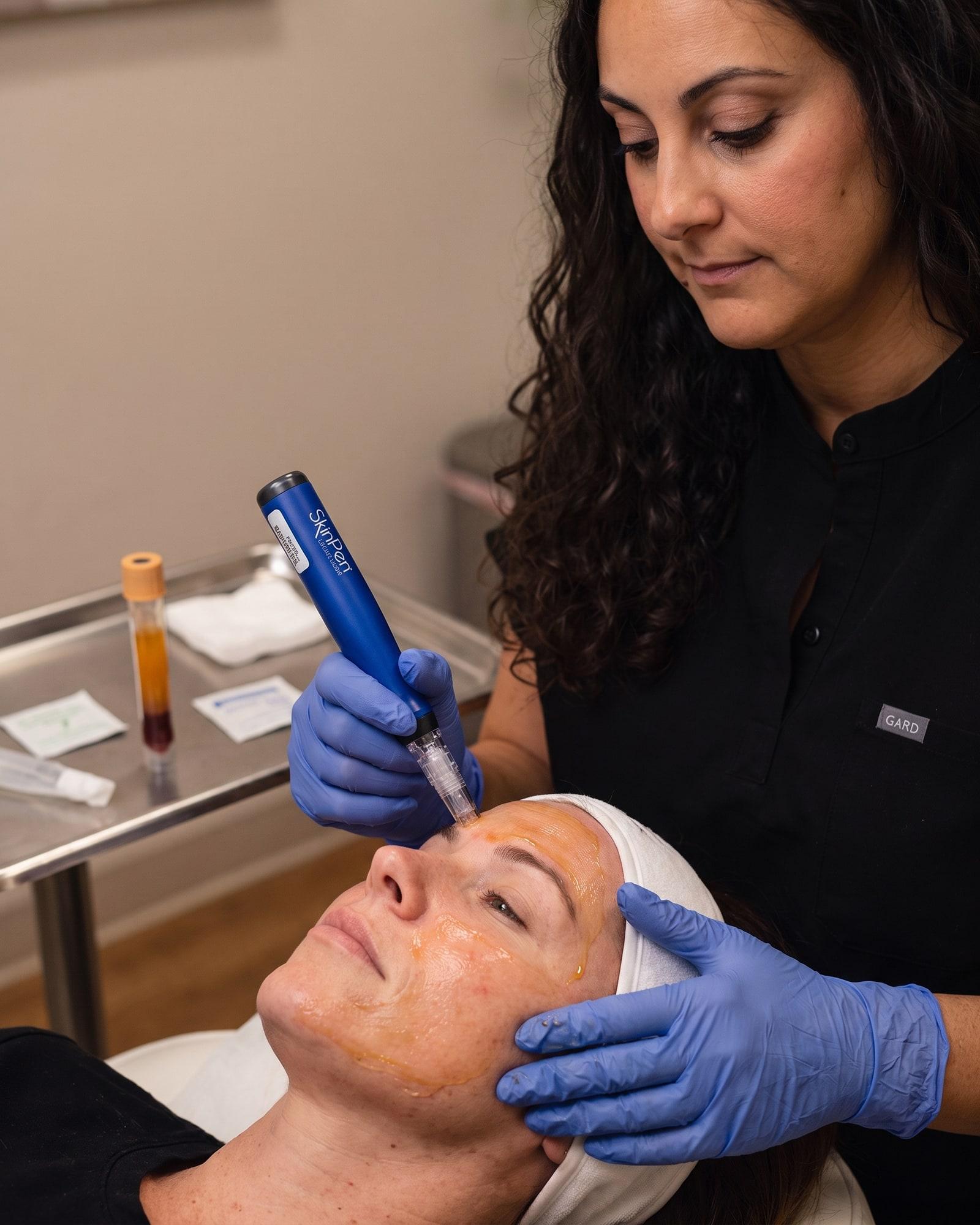
About the treatment
How Microneedling with PRP works
Microneedling with PRP combines two approaches that use your body's own healing. Microneedling creates tiny, controlled channels in the skin, and we perform it with SkinPen, the first FDA-cleared microneedling device. Platelet-rich plasma (PRP) is a concentrate made from a small sample of your own blood and applied to the skin during treatment. The treatment uses no heat, lasers or chemical peels.
The fine needles make micro-injuries that set off your skin's natural repair process. Over the following weeks, new collagen and elastin form and the skin gradually remodels. PRP contains growth factors from your platelets, and applying it to the freshly treated skin is thought to support that healing. Adding PRP to microneedling is widely used, though research on how much it adds is still developing.
Many patients see smoother texture, softer acne scars and fine lines, smaller-looking pores and a more even tone. Results build gradually, and many people see visible change after one to three sessions. It can be used on many skin types, including darker skin tones, and suits adults who want gradual improvement using their own biology.
Questions
Common questions
It may suit adults with acne scars, other scarring, fine lines, enlarged pores, age spots or uneven tone. It is generally not recommended during pregnancy, with an active acne breakout or skin infection, or for people with certain blood or platelet disorders. Your provider will review your skin, health history and goals at a consultation first.
A numbing cream is applied to keep you comfortable. While it takes effect, a small amount of blood is drawn and spun in a centrifuge to separate the PRP. Your provider then moves the SkinPen across your skin and applies the PRP to the treated area. Most people feel light pressure or a mild scratching sensation.
The microneedling itself can take as little as 30 minutes, with extra time for numbing and preparing your PRP. Your skin often looks brighter within a week or two, while collagen keeps building over the next few months. Many patients see visible change after one to three sessions, and your provider will suggest a schedule.
Stop retinoids, exfoliants and harsh skincare five days before, and avoid tanning and self-tanners for a week. Ask your provider before pausing aspirin, ibuprofen or any blood thinner. Hydrate well and arrive with a clean face, free of makeup and lotions. Let us know about cold sores, recent isotretinoin use or a tendency to form raised scars.
Expect redness, mild swelling and sensitivity for 24 to 48 hours, and some light peeling is normal. Skip makeup for 24 hours and use only gentle, hydrating skincare, with no exfoliants or retinoids for five to seven days. Avoid hot showers, saunas and heavy sweating for 48 hours, and wear SPF 30 or higher daily.
Get started
Ready to feel like yourself again?
Book a consultation and we will start where every plan here starts: your history, your labs and what you actually want to change.